Craft
How a handmade silk tie is made, and how to recognise one
What "handmade" means for a tie
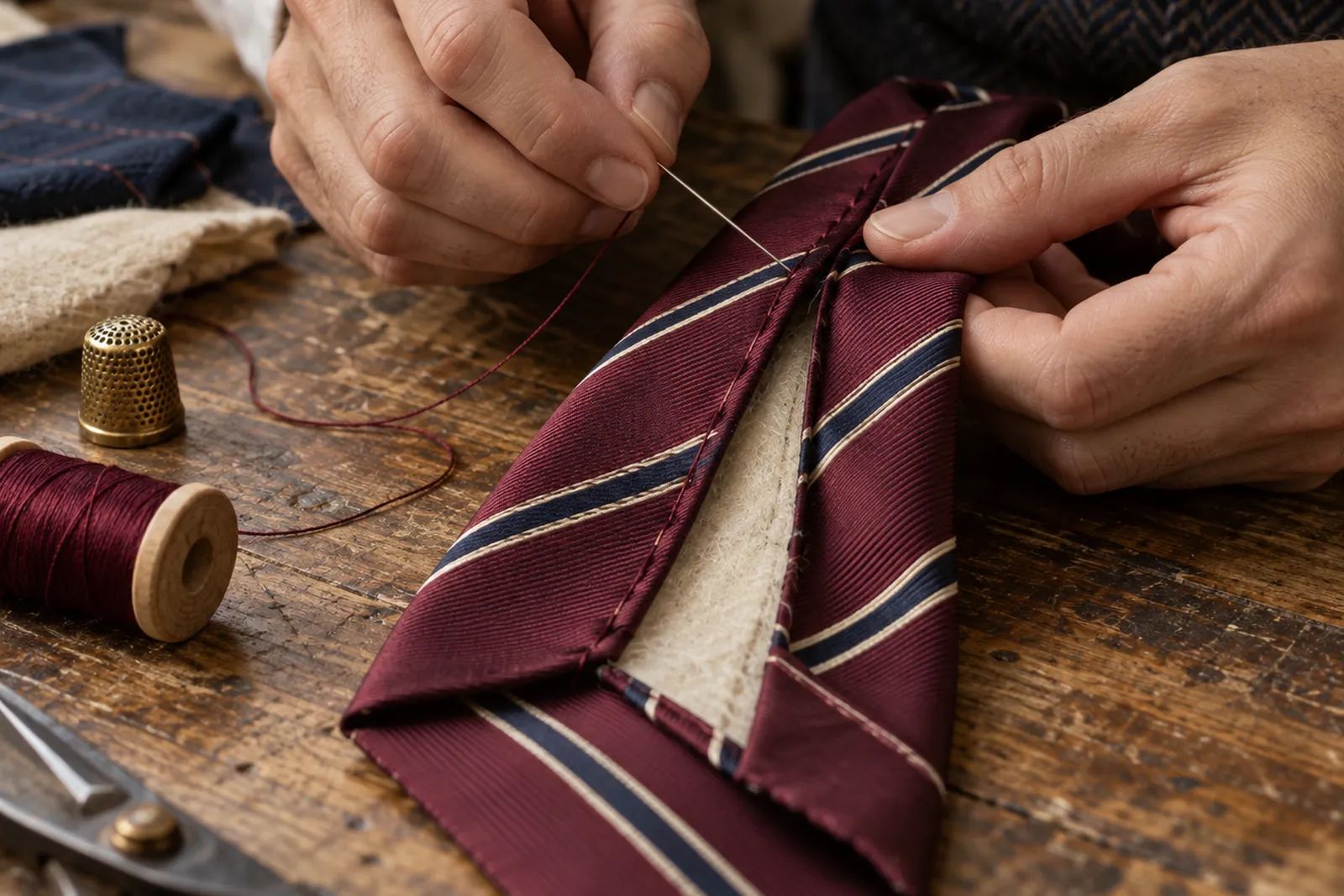
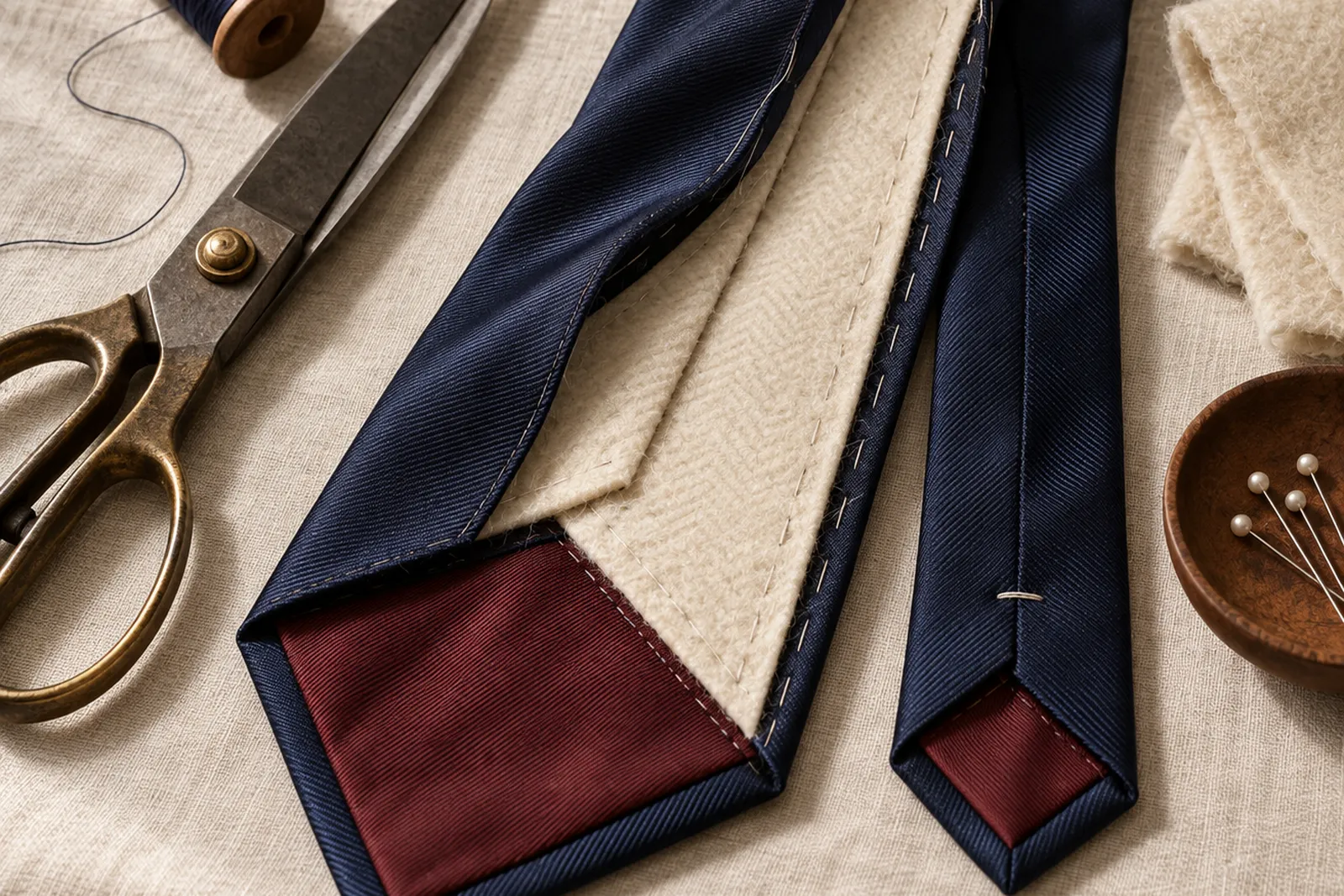
A tie is a small object, but it is built from several layers that have to move together. In a handmade tie, the steps that decide how it drapes and ages are done by a person with a needle: folding the silk around the interlining, closing the back, and securing the ends. Cutting and pressing may use tools, but the closing stitch is sewn by hand.
That single detail is the reason handmade ties behave differently. A hand-sewn tie is held together loosely on purpose.
The parts of a tie
| Part | What it is | Why it matters |
|---|---|---|
| Shell | The outer silk, usually cut in three pieces: blade, neck and tail | Cut on the bias so the tie hangs straight and stretches evenly |
| Interlining | The inner layer the silk is folded around | Gives body and helps the tie spring back after knotting |
| Tipping | The lining behind the blade and tail ends | Finishes the inside of each point |
| Slip stitch | One long hand stitch running up the back seam | Lets the silk slide over the interlining when the tie is knotted |
| Bar tack | A short, heavy stitch across the back seam near each end | Stops the seam from opening |
| Keeper loop | The loop on the back of the blade | Holds the tail in place behind the blade |
How it is put together
- Cutting on the bias. The silk is laid out and cut at 45 degrees to the weave. This uses more cloth than cutting straight, but a straight-cut tie twists.
- Joining the pieces. Blade, neck and tail are sewn into one long strip, with the joins placed where the knot and collar will hide them.
- Tipping the ends. The lining is attached behind each point.
- Folding around the interlining. The silk is folded over the interlining and pressed lightly. Heavy pressing flattens the rolled edges, so a good tie keeps a soft, rounded edge.
- Closing with a slip stitch. One thread runs the full length of the back seam in long, loose stitches. It is left with slack, often as a small loop near the end.
- Bar tacks and keeper. The seam is locked near each end and the keeper loop is sewn on.
Seven checks for a well-made tie
- Look at the back seam. Gently open it near the tail. Hand stitches are long and slightly uneven. A tight, perfectly regular row is machine work.
- Find the slack thread. Many handmade ties have a small loop of thread inside the tail end. It is the reserve of the slip stitch, not a loose end. Do not cut it.
- Check the edges. They should be softly rolled, not pressed into a sharp crease.
- Hold it by the narrow end. The tie should hang straight without spiralling. Twisting means it was not cut on the true bias.
- Pull it gently lengthwise. It should give a little and return. That is the bias cut and the slip stitch working together.
- Feel the body. A wool interlining feels springy rather than papery.
- Check the bar tacks. One near each end, neat and firm.
Why the interlining matters more than people expect
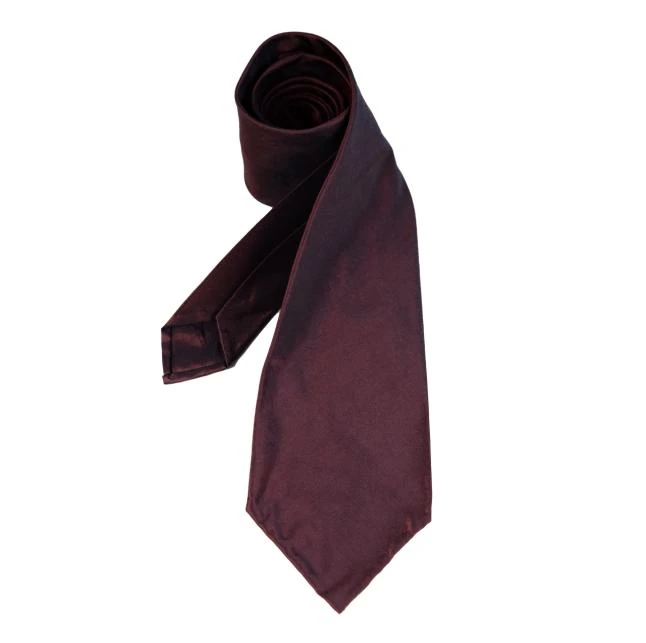
Two ties cut from the same silk can feel completely different because of what is inside. The interlining sets the weight of the knot and how quickly wrinkles relax after a day of wear. Wool is used because its fibres are naturally elastic. A tie with a wool interlining, hung overnight, will usually lose its knot creases without ironing.
How our ties are specified
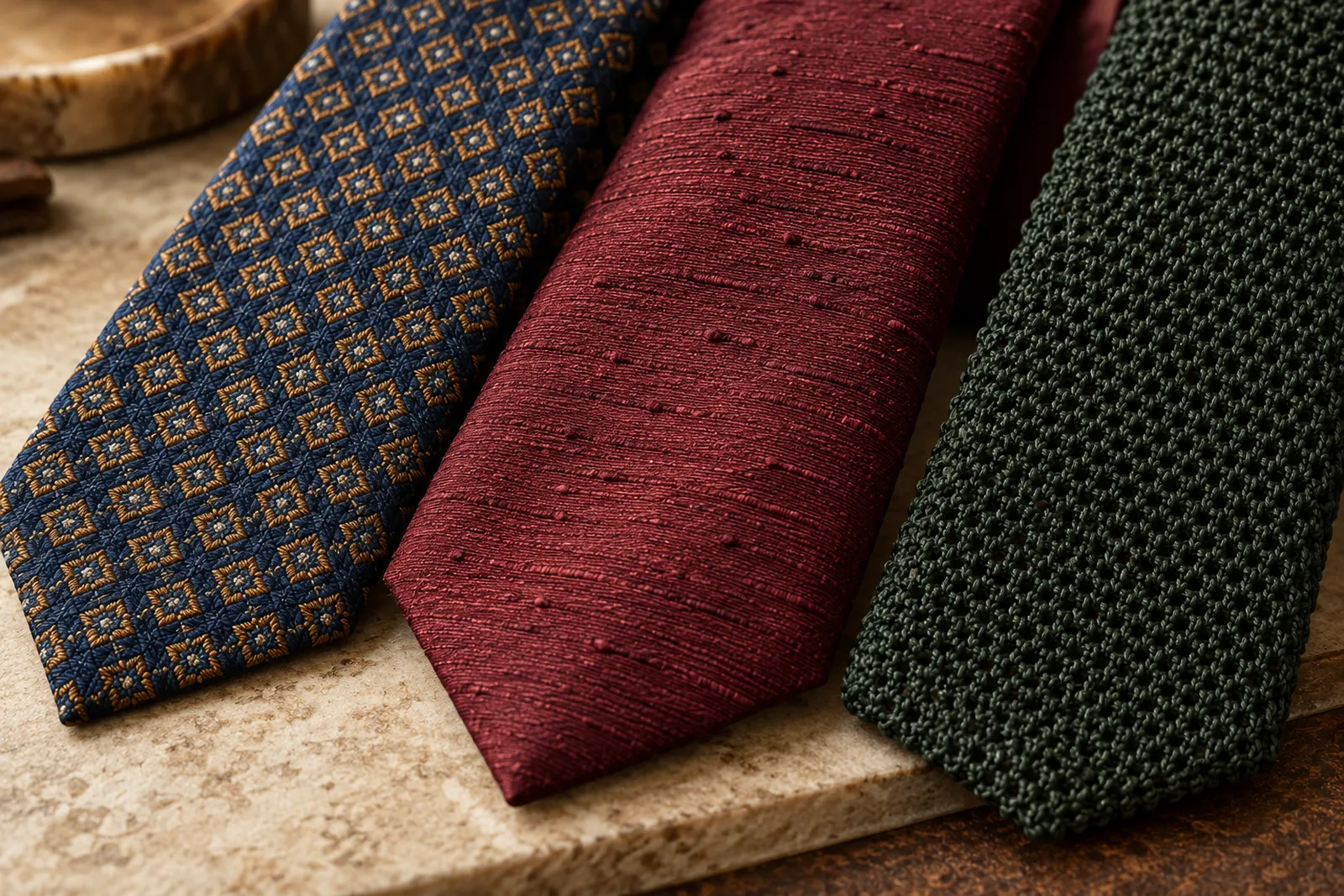
Every tie in the Cocoon of Artisan collection is handmade in 100% mulberry silk and measures 155 cm long by 8.5 cm wide. The jacquard silk ties, which make up most of the range, are finished with a 100% wool interlining. The collection also includes dupioni silk ties and knitted silk ties. You can read more about the three cloths in jacquard, dupioni and knitted silk ties compared.
Frequently asked questions
What is the difference between a handmade and a machine-made tie?
A handmade tie is closed along the back with one long, loose slip stitch sewn by hand, so the silk can move around the interlining. A machine-made tie is closed with a tight, even lockstitch, which is faster but makes the tie stiffer and slower to recover its shape.
Why are ties cut on the bias?
Cutting the silk at 45 degrees to the weave lets the fabric stretch slightly in length. A bias-cut tie hangs straight, knots smoothly and does not twist to one side when worn.
What is tie interlining made of?
Interlining is the inner layer that gives a tie its body. Wool is the traditional choice because it is springy and helps creases fall out. Cocoon of Artisan jacquard silk ties use a 100% wool interlining.
What size is a standard tie?
Most modern ties are between 145 and 155 cm long and 7.5 to 9 cm wide at the blade. Cocoon of Artisan ties measure 155 cm by 8.5 cm.