Fabric guide
Jacquard, dupioni and knitted silk ties: the differences explained
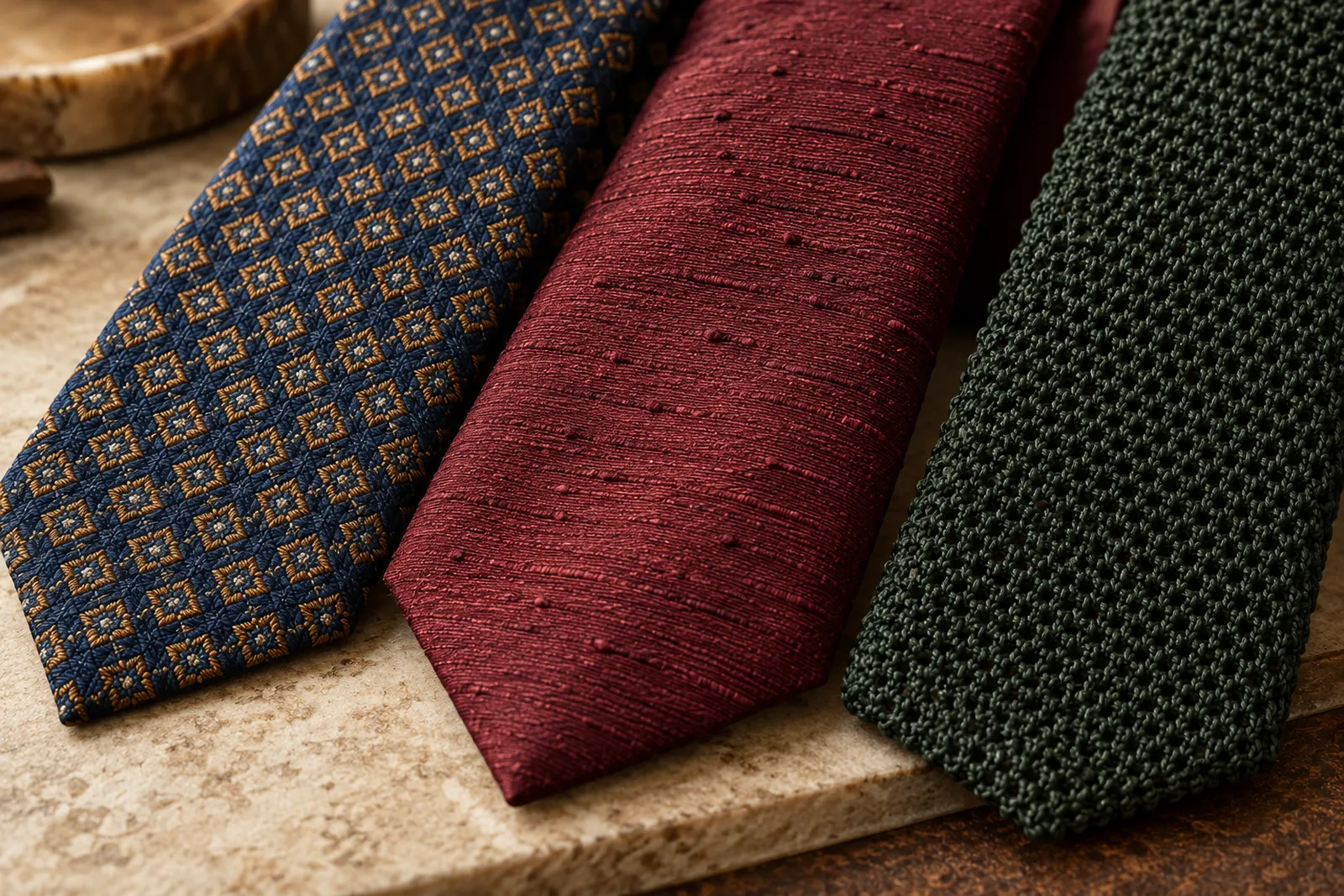
Three silks, three characters
All three of these ties can be made from the same fibre, mulberry silk, and still look and behave nothing alike. The difference is how the yarn is turned into cloth.
| Jacquard silk | Dupioni silk | Knitted silk | |
|---|---|---|---|
| How it is made | Woven on a jacquard loom; pattern formed by the yarns | Plain weave using irregular, slubbed yarn | Knitted in loops, not woven |
| Surface | Smooth to lightly textured, pattern has depth | Crisp, matte sheen, visible slubs | Open, grainy, slightly crunchy |
| Formality | Highest | Medium | Most relaxed |
| Best with | Business suits, ceremonies | Summer tailoring, weddings, blazers | Blazers, flannel, casual suits |
| Pattern range | Very wide: stripes, dots, geometrics, paisley | Usually solid colours | Usually solid colours |
Jacquard silk: pattern woven into the cloth
A jacquard loom controls each warp thread individually, which allows a pattern to be built from the yarns themselves rather than printed afterwards. Because the design is part of the structure, the colours have depth and the surface catches light differently across the motif.
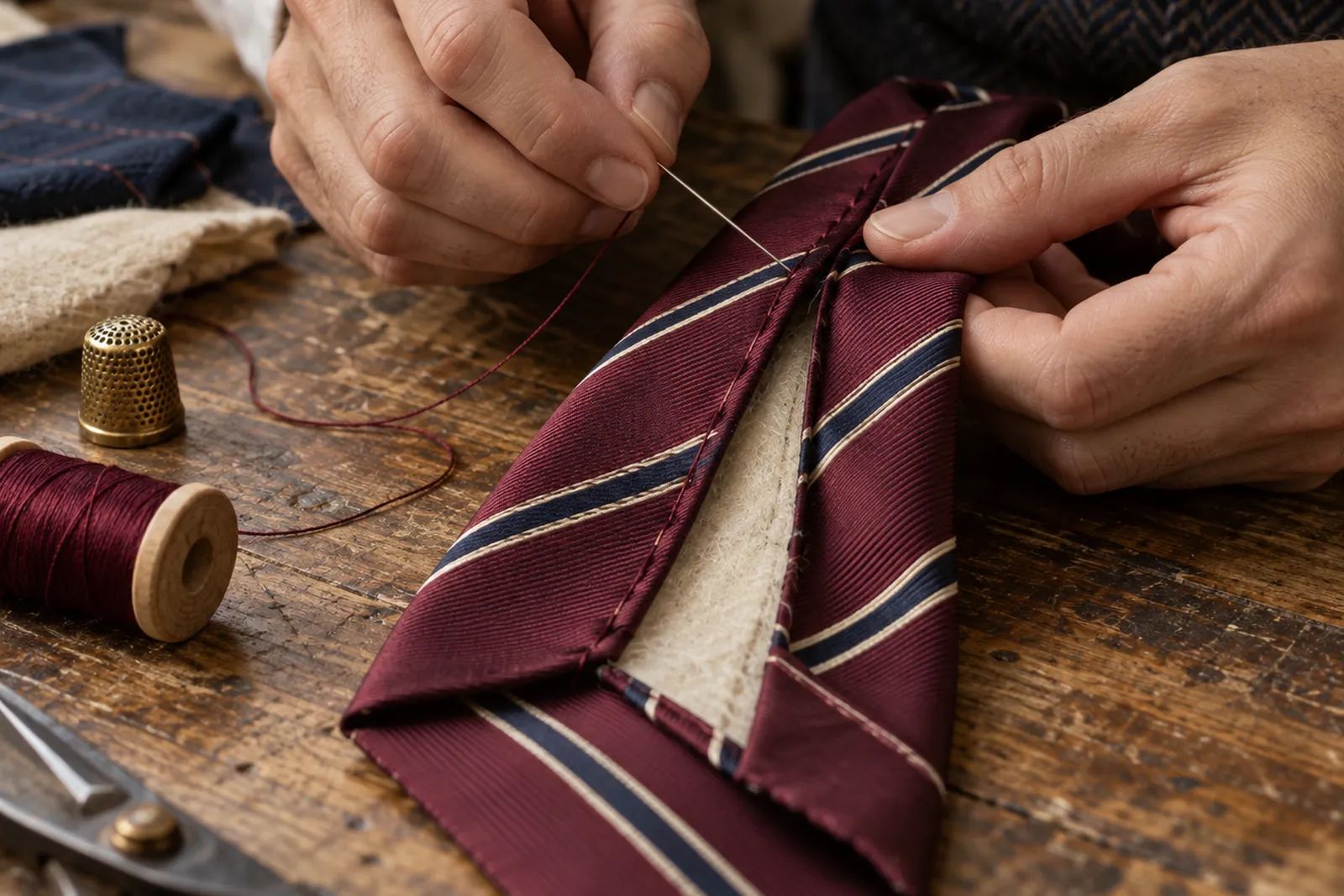
Jacquard is the classic cloth for business and formal ties. It takes a clean knot, holds its shape, and offers the widest choice of patterns. In our collection, jacquard silk ties are handmade with a 100% wool interlining, which gives the knot its body.
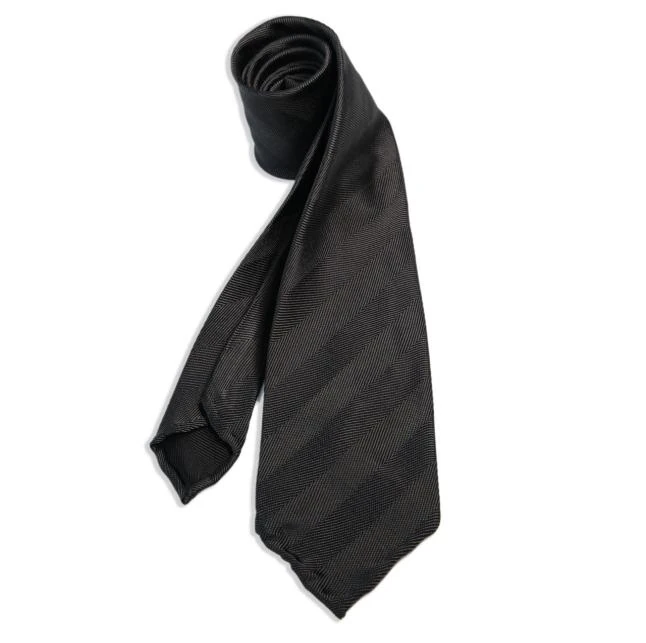
Dupioni silk: texture from the yarn
Dupioni is woven in a simple plain weave, but from yarn with natural thick-and-thin sections called slubs. The result is a crisp cloth with a soft, slightly matte sheen and a lively, irregular surface.
Because the interest comes from the texture, dupioni ties are normally solid colours. They sit between formal and casual: more character than a plain satin, less sober than a business jacquard. They are a strong choice for weddings and for warm-weather tailoring in linen or cotton.
Knitted silk: made in loops
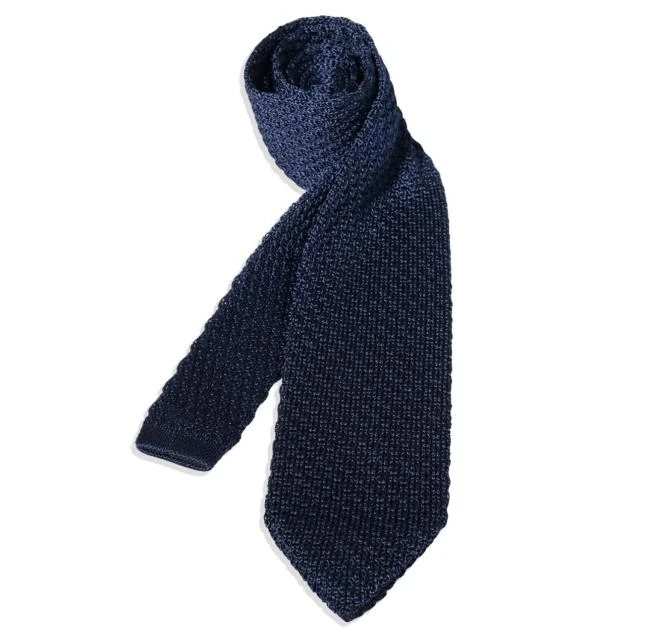
A knitted tie is not woven at all. The silk is knitted, which creates an open structure with stretch and a dry, grainy hand. Knitted ties feel lighter on the chest and make a small, textured knot.
They are the most relaxed of the three and pair naturally with soft tailoring, blazers, button-down collars and flannel. A navy or black knitted silk tie is one of the most versatile pieces a man can own because it sits comfortably between dressed and undressed.
Which should you choose?
- One tie for work and formal occasions: jacquard silk in navy, burgundy or a small repeating pattern.
- A wedding or summer event: dupioni silk in a solid colour.
- Smart-casual and travel: knitted silk in a dark solid.
- A shop or tailor building a range: lead with jacquard for choice of pattern, and add a few dupioni and knitted solids as the texture options.
Specifications in our collection
Jacquard, dupioni and knitted ties in the Cocoon of Artisan collection are all handmade in 100% mulberry silk and measure 155 cm by 8.5 cm. To see how a tie is built and how to check quality, read how a handmade silk tie is made.
Frequently asked questions
Is a jacquard tie better than a printed tie?
Neither is better; they are different. In a jacquard tie the pattern is woven from coloured yarns, so it has depth and texture and cannot fade off the surface. A printed tie has the pattern applied to finished cloth, which allows finer, more pictorial designs on a smoother surface.
What are the bumps in dupioni silk?
They are slubs: thicker sections of yarn that occur naturally when silk is reeled from cocoons spun close together. They are a feature of the cloth, not a flaw, and no two lengths are identical.
Can you wear a knitted silk tie with a suit?
Yes. A dark knitted silk tie works well with a suit in business-casual and smart settings. It is less formal than a woven tie, so it is a poor match for ceremonies with a strict dress code.