Style guide
Pocket square guide: silk, wool or ramie, size and hand-rolled edges
Start with the fabric
The fabric decides how a pocket square looks in the pocket and which folds it can hold.
| Fabric | Look | Best folds | Season and setting |
|---|---|---|---|
| Silk | Lustrous, fluid, rich colour | Puff, reverse puff | Year-round; business and evening |
| Wool | Matte, soft, slightly textured | Puff, loose points | Autumn and winter; flannel and tweed |
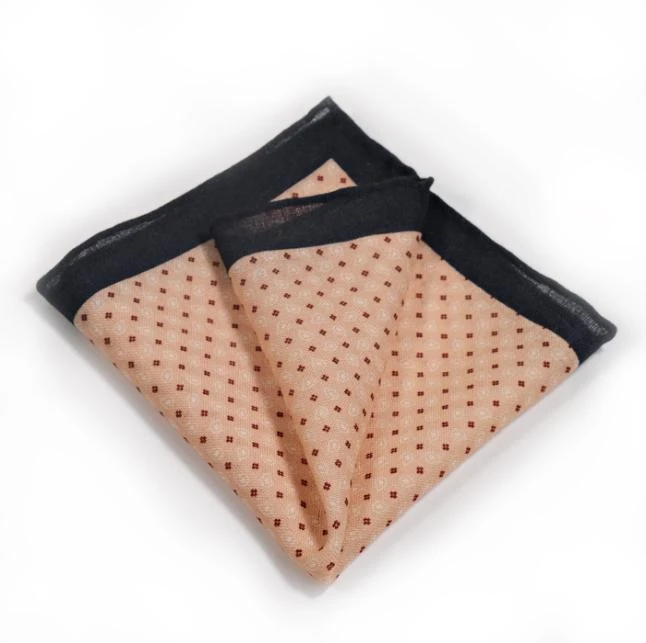
| Ramie or linen | Crisp, dry, clean edges | Flat (presidential) fold, points | Spring and summer; also formal with a white square |
Silk is the most decorative choice. It takes colour and print beautifully and falls into a soft puff without effort. Because it is slippery, it prefers relaxed folds to sharp ones.
Wool is quiet and textured. It stays where you put it and pairs naturally with heavier cloths.
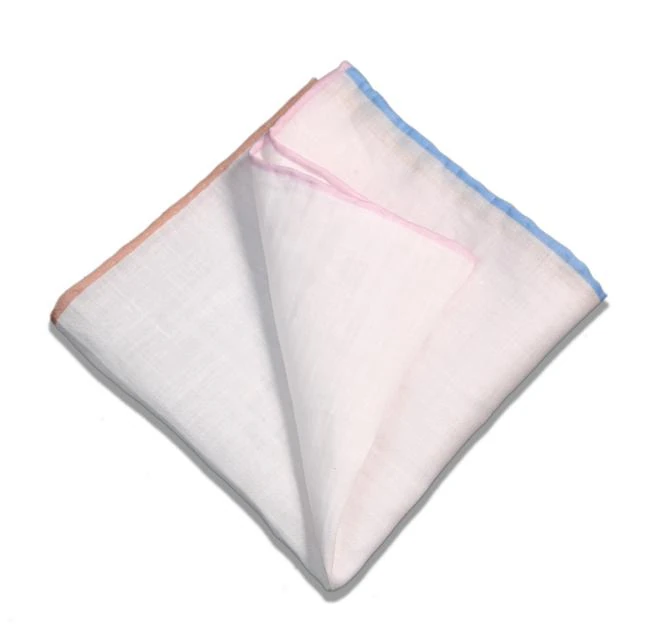
Ramie is a plant fibre closely related to linen in character: strong, breathable and crisp. It holds a straight edge, which makes it the natural choice for a flat fold.
Size
A pocket square needs enough cloth to fill the pocket without bulging. About 30 cm is a practical all-round size. In our collection, silk and wool pocket squares measure 30 × 30 cm and ramie pocket squares 31 × 31 cm.
Hand-rolled edges
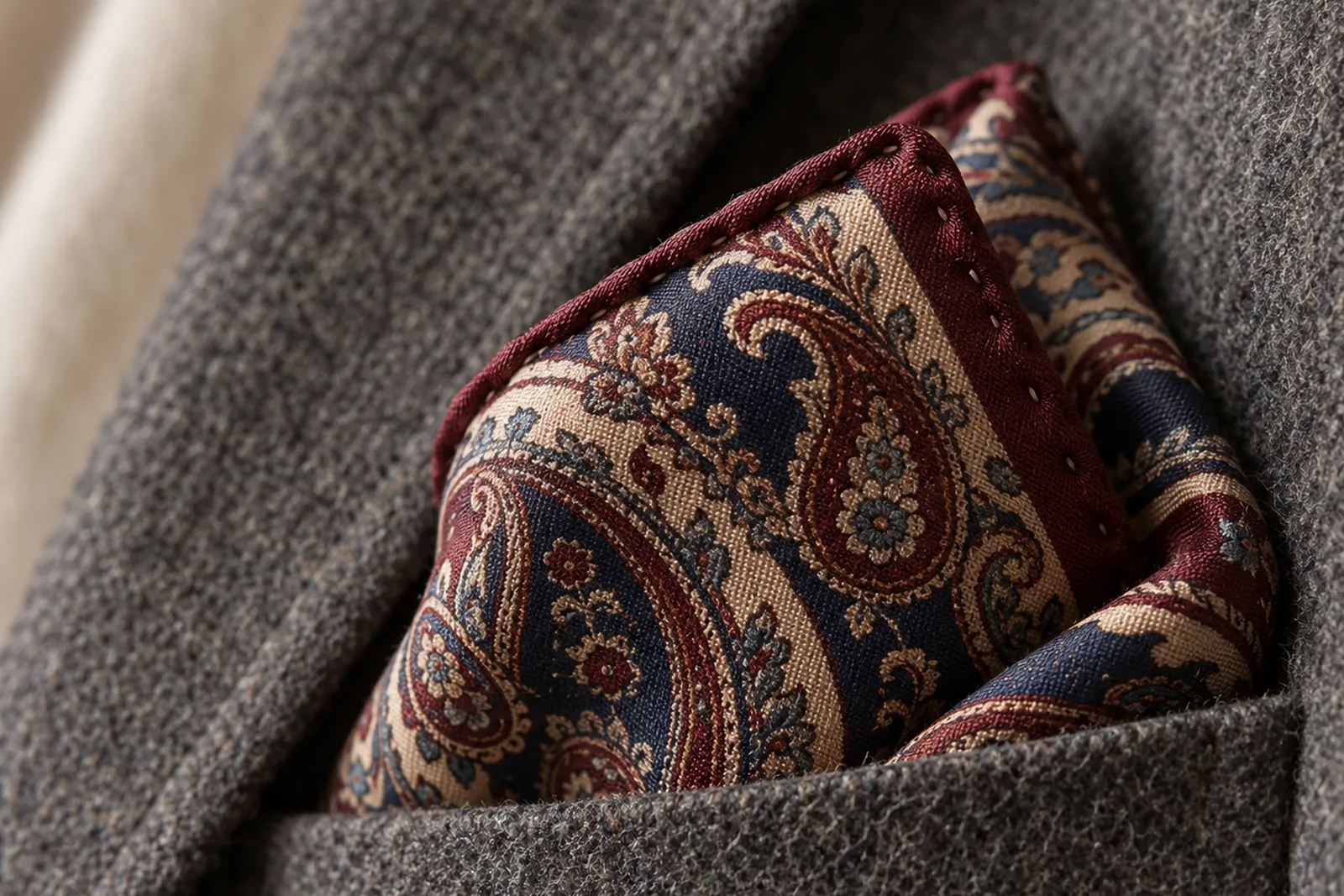
Turn a pocket square over and look at the hem. On a hand-rolled edge, the cloth is rolled into a fine, rounded tube and caught with small stitches spaced a few millimetres apart. The edge looks plump and slightly irregular. A machine hem is flat and perfectly even.
The difference shows when points are on display: a rolled edge gives each point a soft outline. All pocket squares in the Cocoon of Artisan collection are finished with hand-rolled edges.
Matching a pocket square with a tie
- Do not buy matching sets. A square cut from the same cloth as the tie looks like a uniform.
- Echo one colour. Take a secondary colour from the tie or shirt and let the square carry it.
- Contrast texture. Smooth silk tie with a matte wool or ramie square, or the reverse.
- Vary the scale. If the tie has a small pattern, choose a larger one for the square, or a solid.
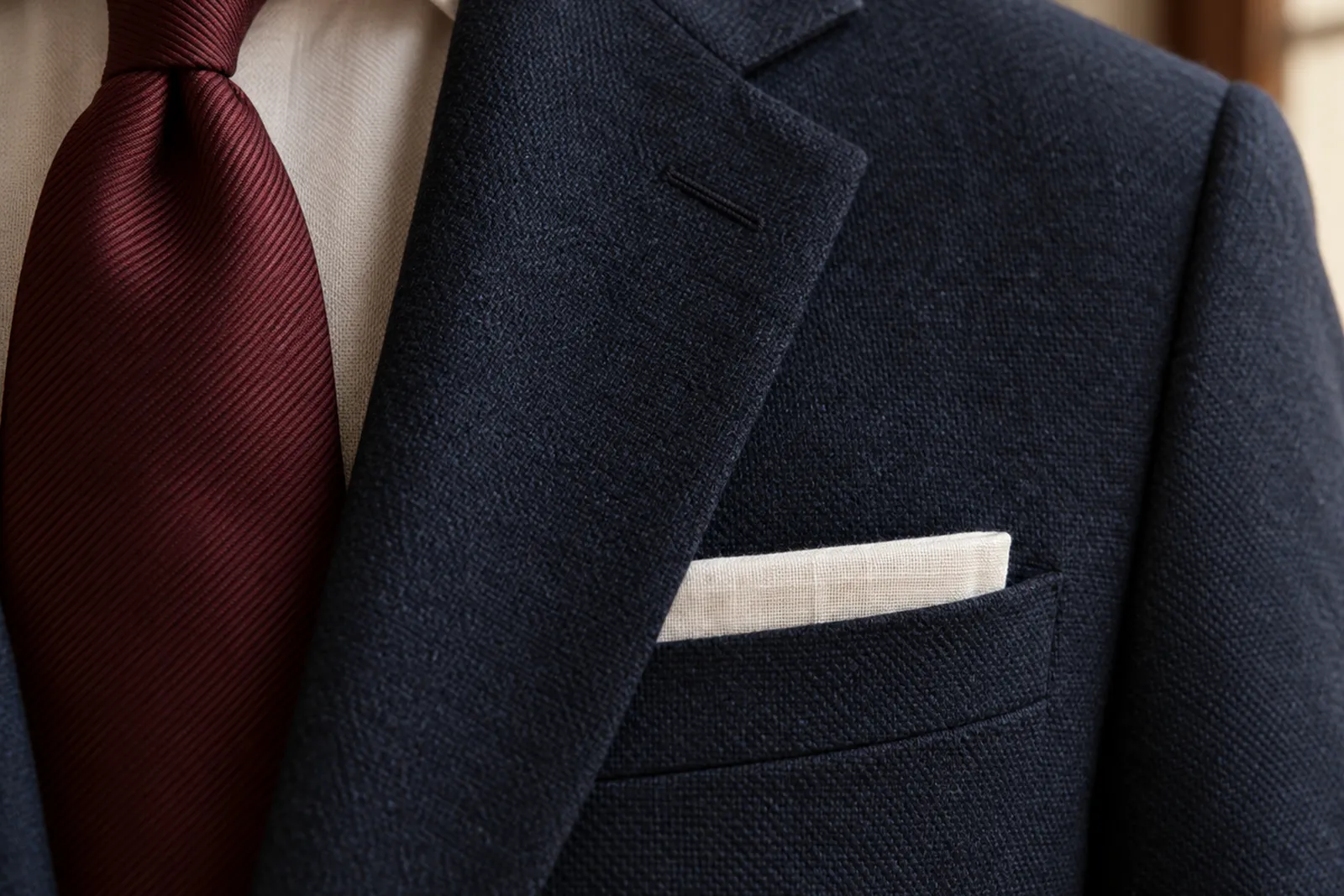
- When in doubt, white. A white ramie or linen square in a flat fold works with every suit and tie.
Three folds worth knowing
- Flat fold. Fold the square into a rectangle the width of the pocket and show about one centimetre above the edge. Clean and formal. Best in ramie or linen.
- Puff. Pinch the centre, let the corners hang, and tuck the corners into the pocket so the rounded centre shows. Relaxed and ideal for silk.
- Points. Pinch the centre and tuck it into the pocket so the corners stand up. Shows off a hand-rolled edge.
Care
Silk and wool squares are best dry-cleaned or gently hand-washed cold and dried flat. Ramie can be pressed with a warm iron while slightly damp to restore a crisp edge. Avoid pressing rolled edges flat. For more detail, see how to care for silk ties and accessories.
Frequently asked questions
What size should a pocket square be?
Around 30 to 33 cm square suits most jackets. Lighter fabrics such as fine silk need more cloth to stay up in the pocket, while wool, ramie and linen hold their place at about 30 cm.
What are hand-rolled edges on a pocket square?
The edge of the cloth is rolled between the fingers into a small, rounded hem and secured with spaced hand stitches. It leaves a soft, plump edge, unlike the flat line of a machine hem.
Should a pocket square match the tie?
No. It should relate to the tie without copying it. Pick up one colour from the tie or shirt, or contrast the texture, for example a matte wool square with a smooth silk tie.