Care
How to care for silk ties, pocket squares and scarves
Daily habits that make a tie last
Most damage to ties happens when they are taken off, not when they are worn.
- Untie it properly. Reverse the steps of the knot. Pulling the narrow end through the knot strains the slip stitch and twists the silk.
- Let it rest. Give a tie at least a day between wears. The interlining needs time to recover.
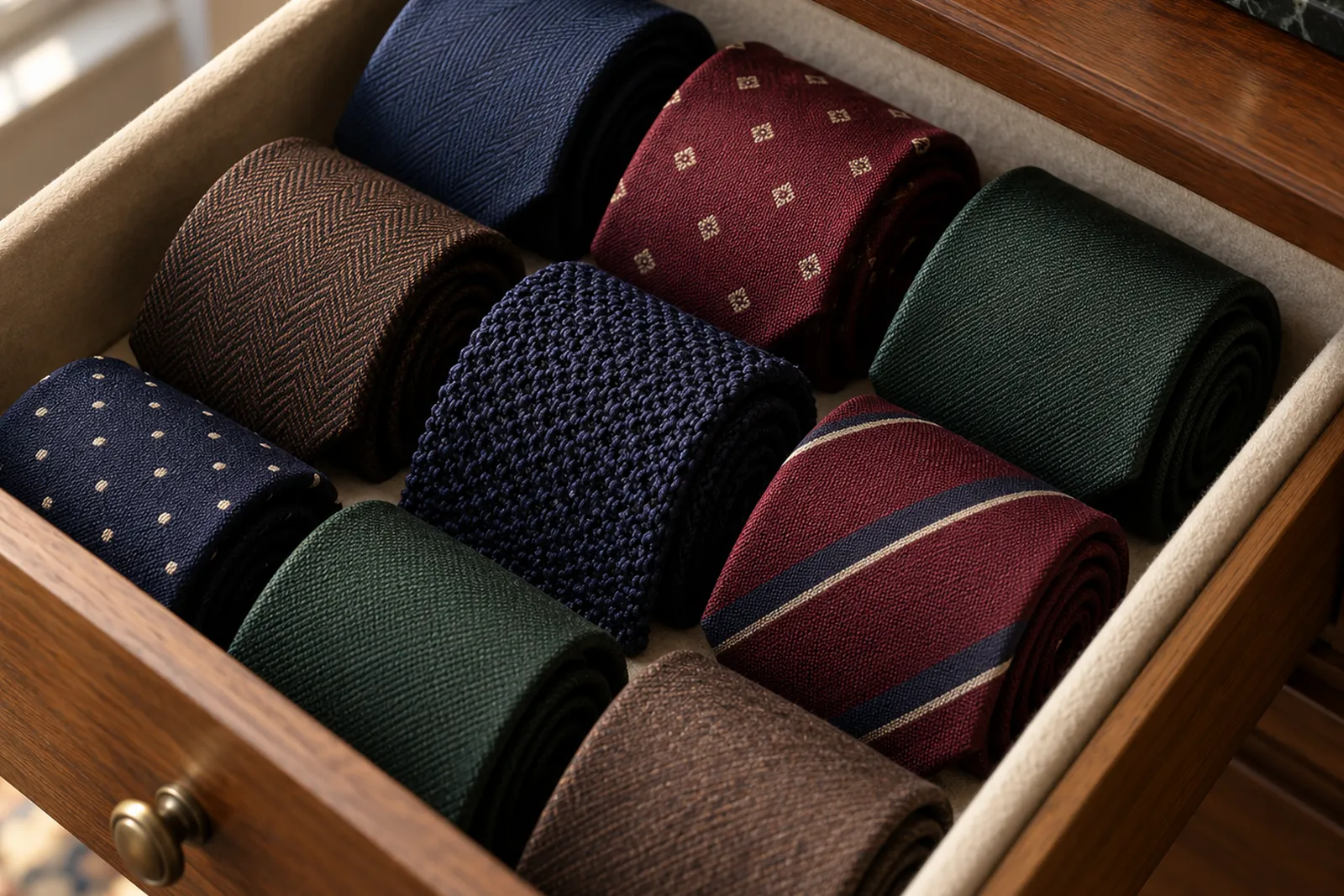
- Hang or roll. Hang woven silk ties over a rounded bar, or roll them loosely from the narrow end. Roll knitted ties; do not hang them.
- Keep it away from the knot overnight. Never store a tie knotted.
Removing creases
- Hang the tie or roll it loosely and leave it for 24 hours. Wool-interlined ties usually recover on their own.
- If creases remain, use steam. Hold a steamer a hand's width away, or hang the tie in a steamy bathroom.
- If you must use an iron, set it to low, place a cotton cloth over the tie, and press lightly from the back. Do not press the edges flat.
Stains
Act quickly and gently.
- Blot, do not rub. Rubbing breaks silk fibres and leaves a pale, rough patch that is worse than the stain.
- Water-based spills: blot with a clean dry cloth. Do not add more water; it can leave a ring on silk.
- Oil and grease: cover with talc or cornflour, leave for several hours, then brush off gently.
- Anything that remains: take it to a dry cleaner and point out the stain. Ask them not to press the tie flat.
| Item | Routine care | Avoid |
|---|---|---|
| Silk ties | Rest, hang or roll, steam | Machine washing, direct ironing |
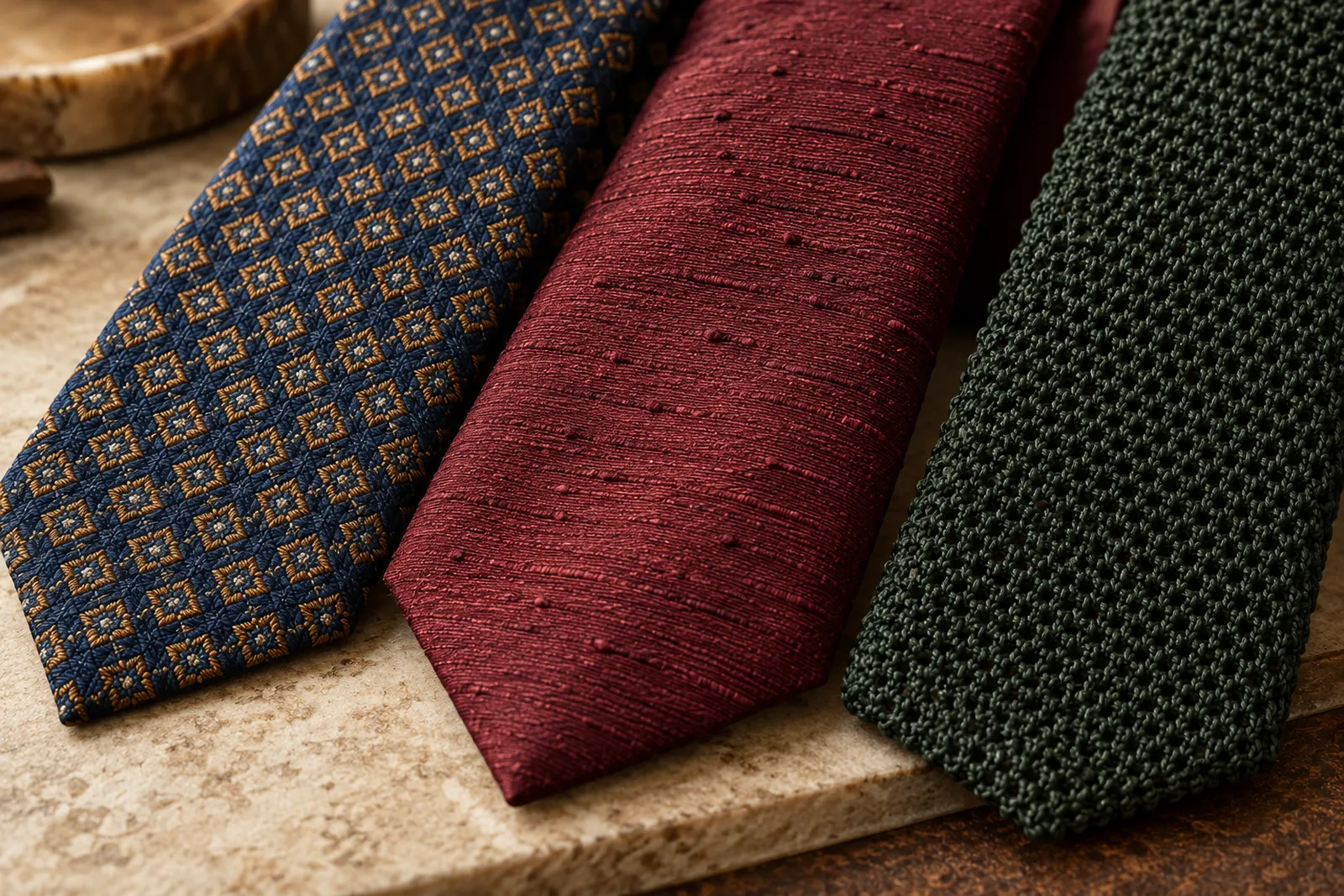
| Knitted silk ties | Roll or lay flat | Hanging for long periods |
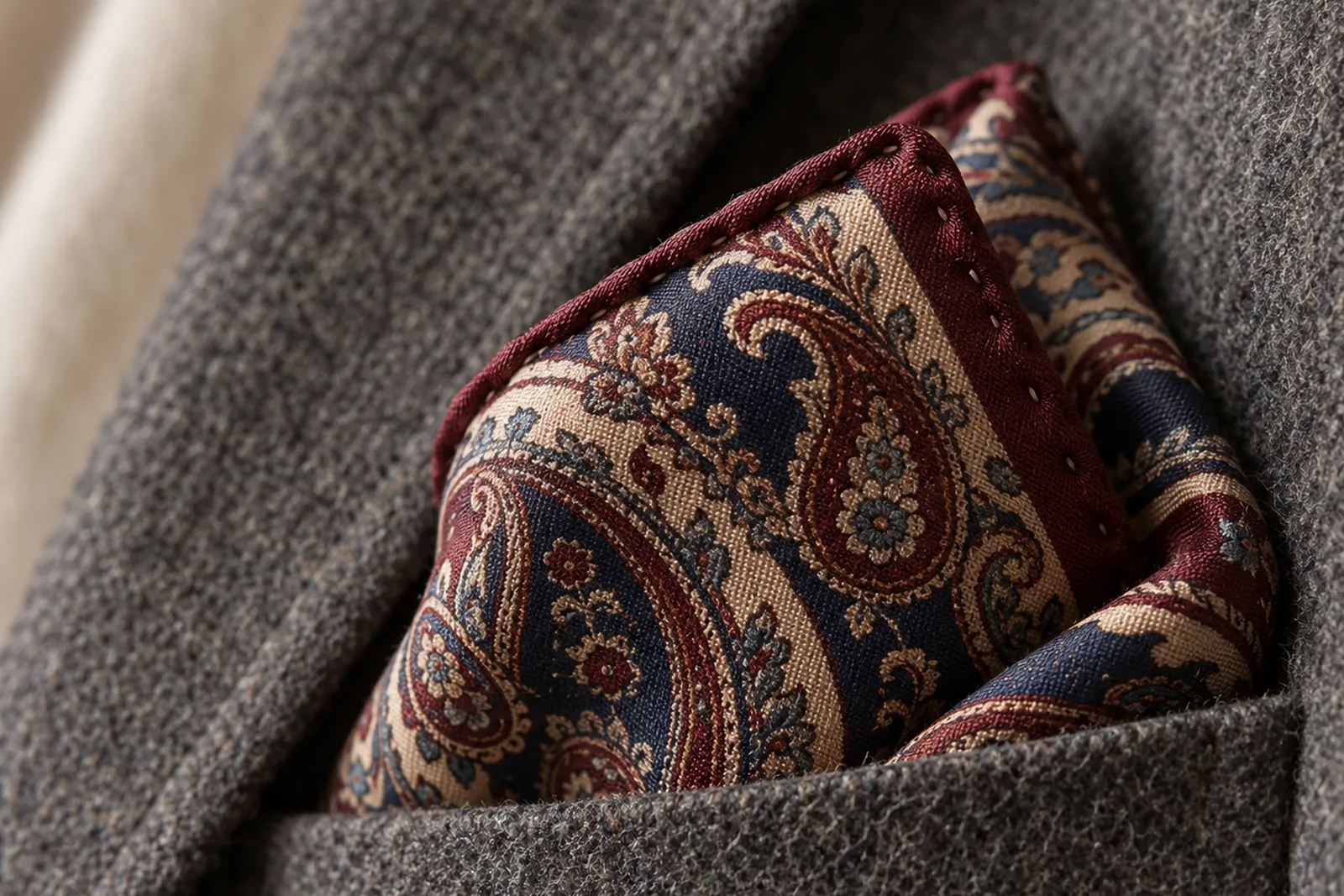
| Silk pocket squares and neckerchiefs | Dry-clean or gentle cold hand wash, dry flat | Wringing, tumble drying |
| Wool scarves and pocket squares | Air after wear, dry-clean or cold hand wash | Hot water, hanging while wet |
| Ramie pocket squares and neckerchiefs | Cool wash, press while slightly damp | Pressing rolled edges flat |
Wool scarves
Wool does not need frequent cleaning. Air a scarf after wearing and fold it rather than hanging it, so it keeps its shape. When it needs washing, use cold water and a wool detergent, press the water out in a towel without wringing, and dry it flat. Store wool clean: moths are attracted to worn fibres.
Ramie and linen-type fabrics
Ramie is a strong plant fibre that becomes softer with washing. It creases easily, which is part of its character. To restore a crisp fold in a pocket square, press it with a warm iron while it is still slightly damp, working up to the rolled edge but not over it.
Travelling with ties
Roll each tie loosely from the narrow end and place it inside a shoe or a small box so it cannot be crushed. Unroll and hang on arrival. A rolled tie creases far less than a folded one.
Why construction affects care
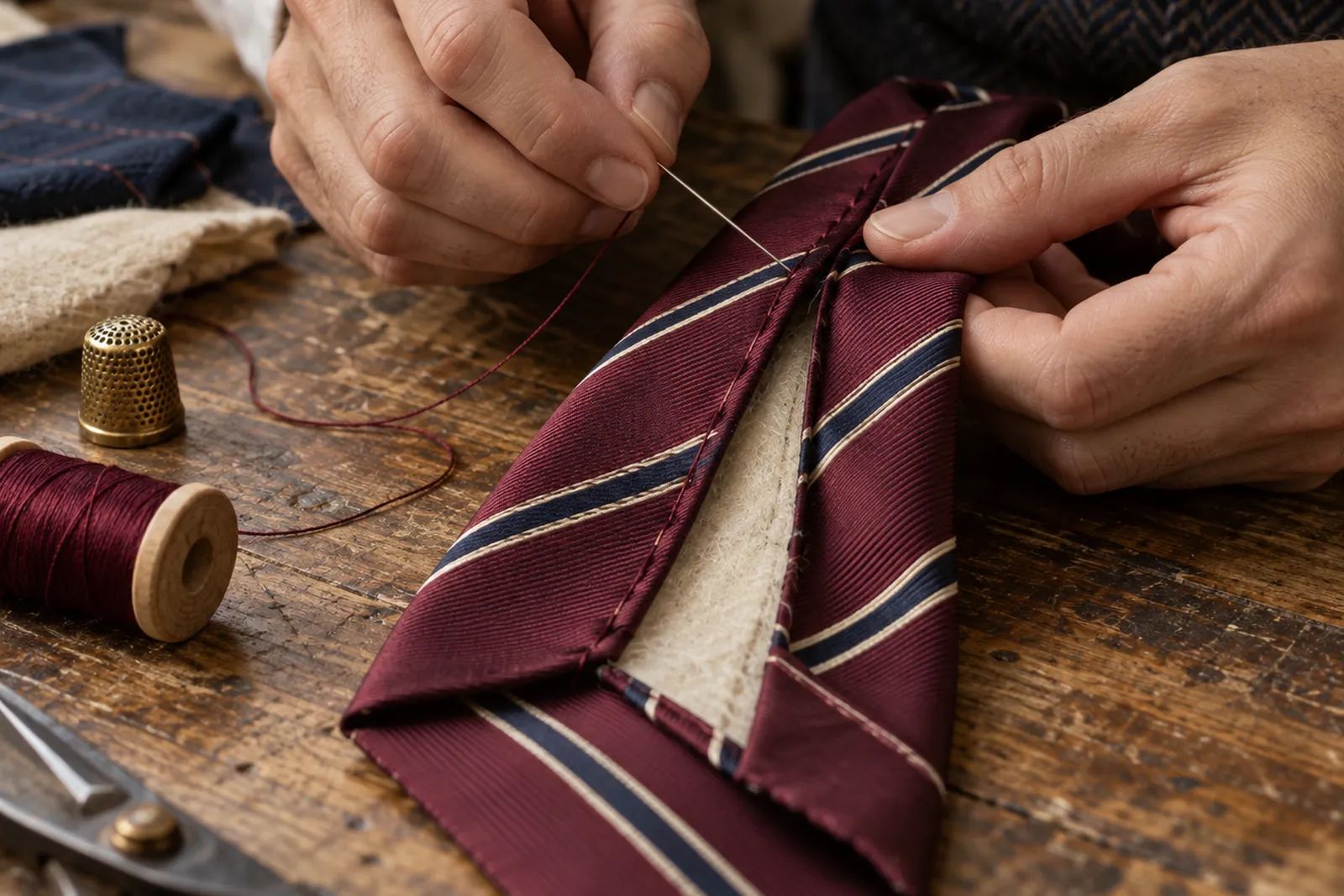
A handmade tie with a loose slip stitch and a wool interlining recovers from wear better than a stiffly sewn one, which is why resting it works so well. For what is inside a tie and how to check the stitching, see how a handmade silk tie is made.
Frequently asked questions
Can you wash a silk tie?
Do not machine-wash or soak a silk tie. Water can mark the silk and distort the interlining. For stains, blot gently and take the tie to a dry cleaner experienced with ties.
How do you get wrinkles out of a silk tie?
Hang the tie or roll it loosely and leave it for a day. For stubborn creases, use steam from a steamer or a bathroom, holding the tie away from the water. Avoid pressing directly with an iron, which flattens the rolled edges.
Should ties be hung or rolled?
Both work. Hanging is convenient for woven silk ties. Knitted ties should be rolled or laid flat, because hanging can stretch a knit over time.